

Recover • Prevent • Perform
Helping Dancers Stay Healthy, Recover Fully, and Perform With Confidence
Dance places extraordinary demands on the body. Whether you’re taking your first ballet class, preparing for college auditions, dancing professionally, or returning after surgery, your body deserves care from a provider who understands the unique physical demands of dance.
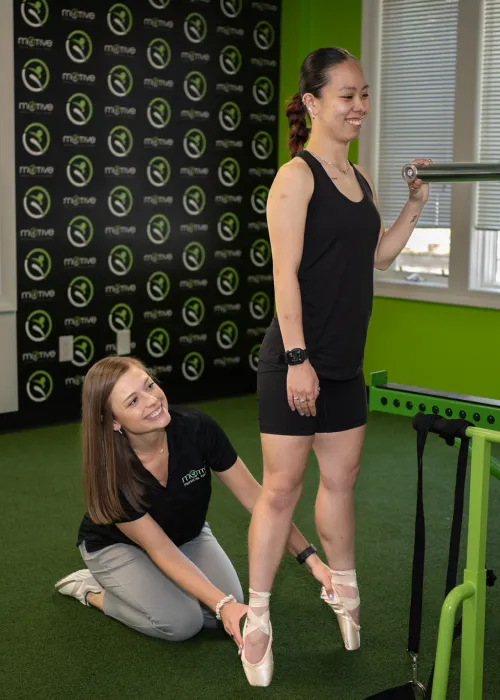
At Motive Sports & Physical Therapy, our Dance Physical Therapy Program is designed specifically for dancers of all ages, levels, and styles. Led by dance physical therapist Kelsey Noble, PT, DPT, we provide individualized care that combines evidence-based rehabilitation with dance medicine principles to help dancers recover from injury, prevent future injuries, and perform at their highest level.
Unlike traditional orthopedic rehabilitation, our treatment plans are built around the movements dancers actually perform. We don’t simply help you return to everyday activities—we help you safely return to pliés, relevés, pirouettes, jumps, pointe work, partnering, rehearsals, competitions, and performances.
Whether you’re recovering from an injury, looking to prevent one, or striving to improve your performance, every treatment plan is individualized to your body, your goals, and your dance journey.
Why Dance Physical Therapy?
Dancers are both artists and athletes.
They routinely train for hours at a time, work in extreme ranges of motion, repeat highly technical movements, and place tremendous demands on their muscles, joints, and connective tissues.
Because of these unique demands, dancers require more than traditional rehabilitation.
As a dance physical therapist, Kelsey understands the biomechanics of dance and the physical demands placed on dancers throughout every stage of training. Treatment is designed not only to relieve pain but also to restore movement quality, rebuild strength, improve confidence, and support a safe return to dance.
Our goal isn’t simply getting you back to walking without pain—it’s helping you return to dancing with strength, confidence, and the physical capacity to meet the demands of your training.
We Meet Dancers Wherever They Are
Recover
Whether you’ve recently sustained an injury or are recovering after surgery, we provide individualized rehabilitation designed around the specific demands of dance.
Common reasons dancers seek physical therapy include:
- Acute dance injuries
- Chronic overuse injuries
- Stress fractures
- Tendon injuries
- Hip pain
- Knee pain
- Low back pain
- Foot and ankle injuries
- Post-operative rehabilitation
Your rehabilitation program is individualized to your diagnosis, dance style, goals, and performance schedule—not a generic protocol.
Treatment may include:
- Manual therapy
- Progressive strengthening
- Neuromuscular re-education
- Balance training
- Functional movement retraining
- Dance-specific exercises
- Return-to-dance progression
Throughout your recovery, our goal is to help you regain confidence in your body while safely returning to class, rehearsals, and performance.
Prevent
Not every dancer comes to physical therapy because they’re injured.
Many dancers work with us proactively to improve movement quality and reduce injury risk before pain develops.
Our injury prevention services include:
- Dance movement assessments
- Pre-pointe evaluations
- Injury risk screening
- Strength assessments
- Mobility evaluations
- Recovery education
- Training load management
- Individualized conditioning programs
By identifying movement limitations early, we can often address small problems before they become injuries that interrupt training.
Perform
Healthy dancers perform better.
Once your body is moving efficiently and pain-free, we can focus on optimizing performance through dance-specific conditioning.
Performance goals may include improving:
- Turnout mechanics
- Extensions
- Balance
- Pirouettes
- Jump height
- Landing mechanics
- Pointe readiness
- Strength
- Endurance
- Movement efficiency
Performance training is individualized to complement your dance training—not replace it.
Dance Injuries We Commonly Treat
Because dance places unique stresses on the body, we frequently work with dancers experiencing:
Foot & Ankle
- Ankle sprains
- Achilles tendinopathy
- Posterior ankle impingement
- Flexor hallucis longus (FHL) tendinopathy
- Plantar fasciitis
- Peroneal tendon injuries
- Stress fractures
- Sesamoid injuries
Knee
- Patellofemoral pain
- Patellar tendinopathy
- Meniscus injuries
- IT band syndrome
- ACL rehabilitation
- Post-operative knee rehabilitation
Hip
- Femoroacetabular impingement (FAI)
- Hip labral tears
- Snapping hip syndrome
- Hip flexor strains
- Gluteal tendinopathy
Spine
- Low back pain
- Lumbar stress injuries
- Spondylolysis
- Facet irritation
- SI joint dysfunction
Other Dance Injuries
- Patellofemoral pain
- Patellar tendinopathy
- Meniscus injuries
- IT band syndrome
- ACL rehabilitation
- Post-operative knee rehabilitation
Returning to Dance After Injury or Surgery
One of the biggest misconceptions in rehabilitation is that once pain is gone, a dancer is ready to return to class.
In reality, dance places demands on the body that far exceed everyday activities. Returning too soon—or without rebuilding the strength, control, endurance, and confidence required for dance—can increase the risk of re-injury and make it difficult to perform at your previous level.
Our return-to-dance process is gradual, individualized, and based on your progress rather than the calendar. We assess not only how you feel but how you move, ensuring your body is prepared for the specific demands of your dance style and training.
Depending on your goals and stage of recovery, your progression may include:
- Barre progression
- Center work progression
- Jump progression
- Pointe progression
- Partnering progression
- Rehearsal progression
- Performance readiness testing
- Load management strategies
Whether you’re recovering from an ankle sprain or returning after hip surgery, our goal is to help you return stronger, more confident, and prepared for the demands of dancing.
What Makes Our Dance Physical Therapy Different?
At Motive Sports & Physical Therapy, dance isn’t just another sport we treat.
Our approach combines clinical expertise with an understanding of dance biomechanics, movement quality, performance demands, and injury prevention.
Every evaluation considers:
- Your dance style
- Your level of training
- Current choreography and rehearsal schedule
- Upcoming performances or competitions
- Individual movement patterns
- Personal goals
Treatment is designed to help you move efficiently, reduce injury risk, and support long-term participation in dance.
Collaborative Care
Successful rehabilitation doesn’t happen in isolation.
When appropriate, we collaborate with physicians, orthopedic surgeons, dance instructors, studio owners, athletic trainers, and parents to ensure every dancer has the support they need throughout recovery.
Our goal is to create a seamless transition from the clinic back to the studio while keeping everyone involved in the dancer’s progress.
Meet Kelsey Noble, PT, DPT
As both a doctor of physical therapy and an active member of the dance community, Kelsey Noble understands the unique physical and artistic demands dancers face.
She works with dancers of all ages and levels—from young students preparing for pointe to collegiate, pre-professional, and professional dancers recovering from injury, returning after surgery, or striving to reach the next level of performance.
Her philosophy is simple:
Every dancer deserves care from a provider who understands dance.
Treatment goes beyond reducing pain. It focuses on helping dancers build strength, confidence, resilience, and the physical foundation needed for a long, healthy dance career.
Ready to Keep Dancing?
from an injury, returning after surgery, preparing for your next performance, or looking to prevent future injuries, we’re here to help.
Your body is your instrument—and investing in it is one of the most important things you can do as a dancer.
Schedule your dance physical therapy evaluation today and discover how specialized, dance-specific care can help you recover, prevent injuries, and perform with confidence.