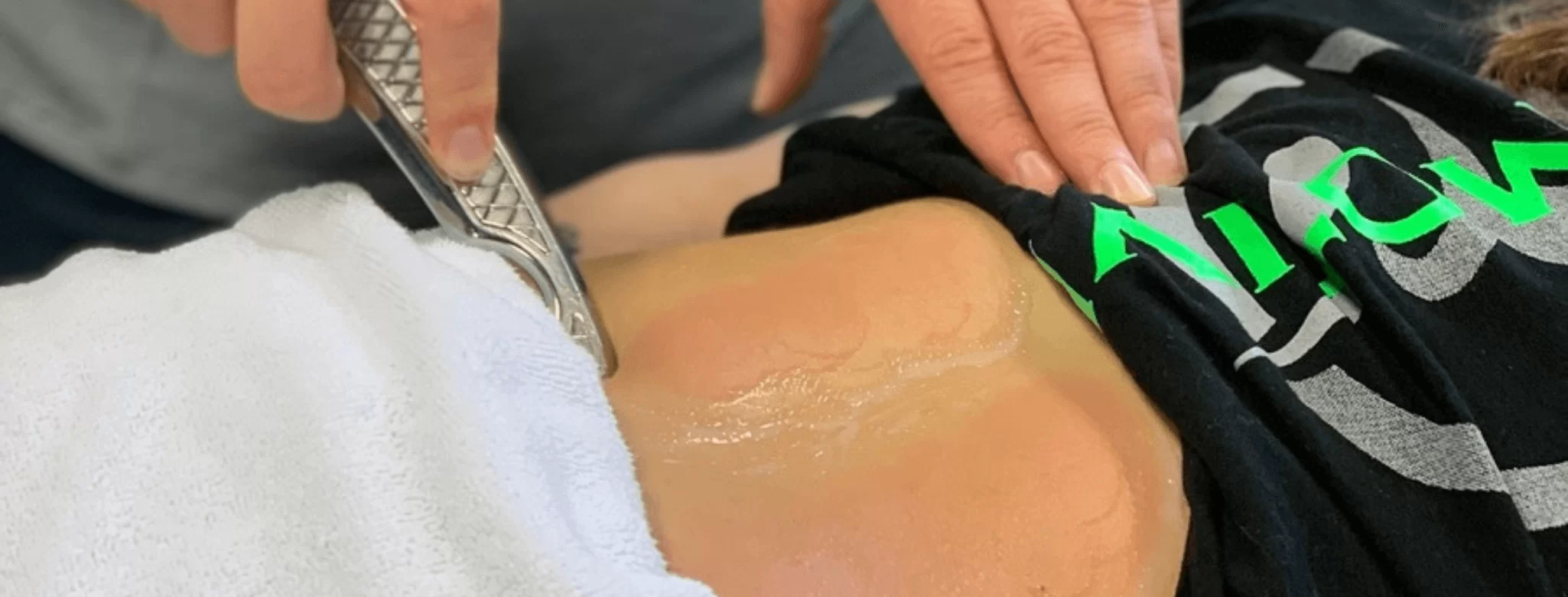
Support Soft Tissue Recovery and Mobility
If you are exploring the Graston Technique in Chadds Ford, Malvern, Media, Berwyn and West Chester, PA, you likely manage persistent muscle tightness, scar tissue from a previous injury, or restricted movement in your joints. This specialized form of manual therapy uses stainless steel instruments to identify and address areas of soft tissue dysfunction. At Motive Sports & Physical Therapy, our physical therapist incorporates the Graston Technique as part of a comprehensive rehabilitation program designed to improve circulation, reduce localized tension, and support a return to daily activity.
Understanding Instrument-Assisted Soft Tissue Mobilization
The Graston Technique is a form of instrument-assisted soft tissue mobilization (IASTM). During treatment, a clinician uses specially contoured instruments to glide over the skin. These tools act like an amplifier, allowing the therapist to feel rhythmic inconsistencies in the underlying connective tissue, such as fascia, tendons, and muscles.
When tissues are injured, they often heal with a disorganized structure, commonly referred to as adhesions or scar tissue. These areas can become sensitive and less flexible than healthy tissue. The Graston Technique uses controlled cross-friction massage to create a localized inflammatory response. This process signals the body to resorb old, disorganized fibers and lay down new, functional tissue.
Common Situations Where This Technique May Help
- Improving ankle range of motion after a chronic sprain
- Reducing shoulder stiffness related to rotator cuff irritation
- Addressing trigger finger or palm-side tendon restrictions
- Smoothing out surgical scars to reduce pulling sensations
- Relieving calf tightness in runners or athletes
- Managing hamstring or quadriceps strains
- Supporting wrist mobility for repetitive manual tasks
Each application is adapted to the specific density of the tissue and the patient’s sensitivity level.

When the Graston Technique May Be Helpful
Clinical evidence supports the use of IASTM for chronic tendon issues and post-surgical recovery where mobility is limited by internal scarring. It is frequently used when traditional stretching or hands-on massage has not fully resolved a movement restriction.
People often seek the Graston Technique for:
- Plantars fasciitis and chronic heel discomfort
- Achilles tendonitis or thickening of the calf tendon
- Lateral epicondylitis (tennis elbow) or golfer’s elbow
- Post-surgical scar management to improve skin and muscle glide
- Iliotibial (IT) band syndrome affecting the hip or knee
- Chronic neck or back tension related to postural strain
A structured program ensures that this technique is used alongside therapeutic exercise to maintain the mobility gains achieved during the session.
How Care Progresses at Motive Sports & Physical Therapy
Care begins with a detailed physical evaluation. Our physical therapist reviews your injury history, tests your range of motion, and identifies specific areas of restriction. Together, you will define clear, measurable goals, such as reaching further behind your back or walking without a pulling sensation in your foot.
The plan should match your symptoms and goals. Graston Technique sessions are typically brief and focused on specific hot spots of tension. Because the goal is to improve how tissues move, the treatment is almost always followed by stretching and strengthening exercises. This ensures that the newly mobilized tissue is trained to function in its lengthened state. Progress is monitored at each visit, with adjustments made to the intensity of the manual work as the tissue becomes healthier.
A Team Focused on Tissue Health and Function
Patients who choose Motive Sports & Physical Therapy for the Graston Technique receive professional, individualized care. Our physical therapist explains the rationale behind the treatment and monitors the skin’s response throughout the session. We believe that improving the quality of your soft tissue is a vital step toward long-term movement efficiency.
Our clinic emphasizes:
- Precise identification of tissue restrictions
- Evidence-informed application of IASTM
- Collaborative goal setting for your recovery
- Integration with functional movement and loading
- Strategies for maintaining tissue health at home
What to Expect During Your Session
During your visit, a small amount of emollient is applied to the skin to allow the instrument to glide smoothly. Your therapist will use the tool to scan the area, identifying gritty or rough patches in the tissue. Once identified, specific strokes are used to address those restrictions. You may feel a dull ache or a localized scraping sensation, which is a normal part of the process.
Follow-up visits build on the mobility gains from previous sessions. As your tissue becomes more pliable and less sensitive, the focus shifts toward higher-level strengthening to ensure the area remains resilient. Your therapist will provide specific guidance on how to manage the area between visits, including hydration and gentle movement.
Frequently Asked Questions
Does the Graston Technique cause bruising?
How many sessions will I need to see results?
Is the Graston Technique the same as Gua Sha?
Enhance Your Recovery and Tissue Mobility
Restricted soft tissue should not limit your performance or comfort. A thoughtful evaluation and specialized manual therapy can help restore the natural glide of your muscles and tendons. Experience a more fluid way to move by contacting Motive Sports & Physical Therapy today. Our team in Chadds Ford, Malvern, Media, Berwyn or West Chester, PA is ready to help you determine if the Graston Technique is the right addition to your rehabilitation plan.
Your Next Steps…
- Request An Appointment
- Receive A Custom Treatment Plan
- Work Hard and Progress In Your Recovery
- Recover & Enjoy Life Pain-Free